ESG reporting is done. Now what?

Ai generated image
Every year, companies spend hours collecting ESG data, reviewing policies, updating targets and documenting progress.
And then the report is published...
So now what?
If the final report is simply uploaded to a website and forgotten until next year, a lot of its potential value is lost.
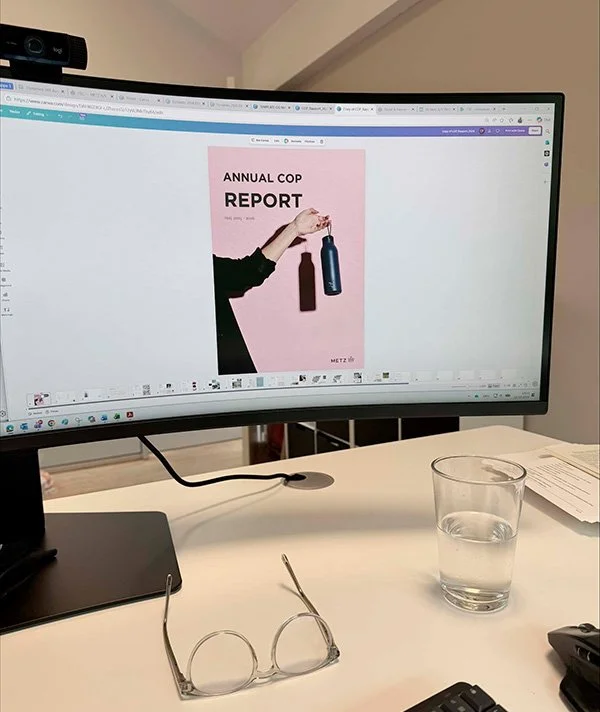
At Metz, we have just published our new Annual COP Report 2025–2026. And for us, the value is not only about documenting what we have done.
It is about being able to use it.
When customers need answers
Customer requirements today often go far beyond product, price and delivery.
A customer may ask for Scope 3 data. Procurement may send a supplier questionnaire. Someone may need documentation on working conditions in the supply chain. Or new legislation may suddenly require information that wasn't requested a year ago.
Questions increasingly relate to areas such as:
✔️ CO₂ emissions and climate targets
✔️ Supplier due diligence and social audits
✔️ Product and material compliance
✔️ Packaging and environmental data
✔️ Policies, certifications and governance
✔️ Traceability and supporting documentation
This is where the ESG report becomes practical.
It gives customers one place to get an overview of how we work, what we have documented, what we have achieved and where we are heading.
And when more detailed information is needed, the systems and documentation behind the report provide the next layer.
For us, that makes the report more than communication.
It becomes a tool we can actually use in our customer relationships.

The report also tells us something about ourselves
The value doesn't stop with external requests.
Bringing ESG information together also gives us an opportunity to look at our own business from a broader perspective.
▫️Where are the biggest risks in our supply chain?
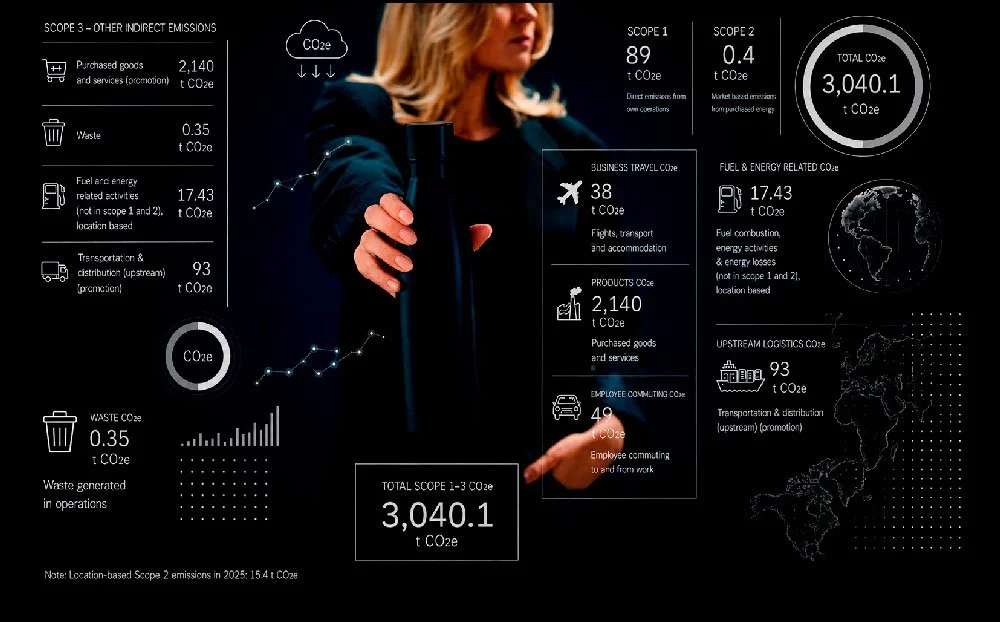
▫️Where are our emissions actually coming from?
▫️Which suppliers require closer follow-up?
▫️Are new regulatory requirements covered by our
processes, or is there a gap?
▫️Which initiatives are creating progress, and where are
results standing still?
Those are questions that help turn ESG reporting into something we can use in day-to-day business management.
But there is also value in making the work visible internally.
ESG touches many different roles at Metz, from purchasing and sales to compliance, logistics and management. Bringing the work together in one report helps create a shared understanding of what we are working towards, why certain processes and requirements exist, and how different parts of the organisation contribute.
It also makes progress visible. The work employees contribute to throughout the year becomes part of a bigger picture rather than a series of separate tasks and requirements.
That turns reporting from documentation of the past into something that supports decisions, awareness and direction for the future.
So, what is the real value?
For us, the answer is not simply that we have an ESG report.
The value is that the work can be used.
✔️ Customers get easier access to information about how we work
✔️ More detailed customer requests can be supported by the documentation and processes behind the report
✔️ Employees get a clearer picture of how their work contributes to our overall ESG efforts
✔️ Progress, risks and gaps become more visible across the organisation
✔️ The results help us decide where to focus next
And perhaps that is the most important question to ask after publishing an ESG report:
Not only: What did we report?
But: What to do with it now?
Our new Annual COP Report 2025–2026
Our new report brings together our latest work and progress across climate, responsible sourcing, product compliance, packaging, employees, governance and other areas of responsible business.
It is our 12th Communication on Progress under the UN Global Compact and our second ESG disclosure aligned with the VSME Comprehensive framework.
But most importantly, it is meant to be used:
By our customers when they want to understand how we work.
By our employees to see how their work contributes to the bigger picture.
By our business to understand our progress, identify where we need to improve and decide where we need to go next.