Why spring has become ESG reporting season for SMEs

Ai generated image
For many SMEs, spring has quietly become ESG season.
It's the time when companies in the UN Global Compact start preparing their annual Communication on Progress (CoP) self-assessment - due before the end of July. And for many businesses, it's also when ESG and responsibility reports get finalised.
In practice, these two processes often overlap. They pull from the same pool of data: climate figures, employee metrics, supplier information, governance processes, and policies.
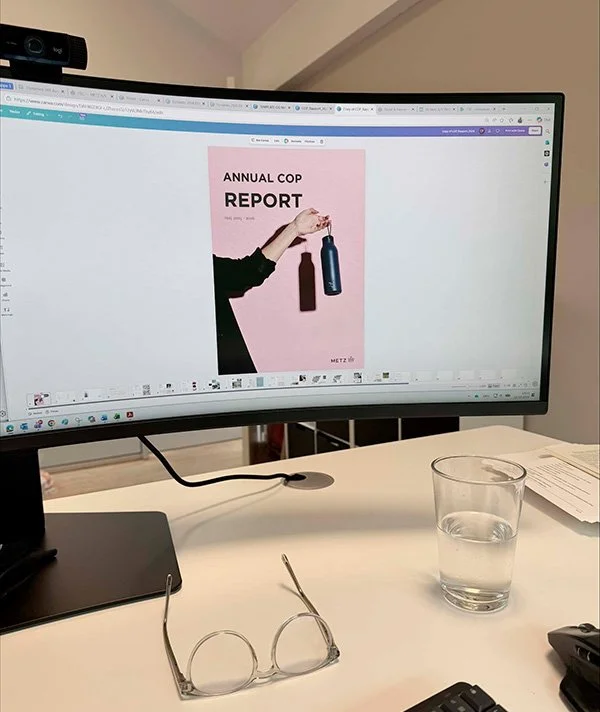
At Metz, we're working on our latest ESG report right now. And once again, we're using the VSME framework as part of how we structure our data.
Last year, we updated our reporting to align with VSME datapoints. Since then, the framework has gained serious momentum — especially among SMEs looking for a practical, proportionate way to handle ESG reporting.
It's also becoming more relevant across supply chains. Larger companies are increasingly asking suppliers for structured ESG data, often as they prepare for their own sustainability reporting obligations.
What is VSME? And who developed it?
VSME stands for Voluntary Sustainability Reporting Standard for non-listed SMEs.
It was developed by EFRAG, the European advisory body that supports the European Commission on sustainability reporting standards. EFRAG also helped shape the ESRS standards under the CSRD regulation.
VSME was created as a simplified, voluntary framework. The idea: give companies a way to work with ESG reporting in a more structured, manageable way — without the full weight of CSRD compliance.
Since the Omnibus simplification proposals came through, VSME has become even more relevant. It's no longer just for traditional SMEs. It's increasingly used by companies outside the revised CSRD scope who still want a practical ESG reporting approach.
At the same time, VSME is becoming a common reference point in supply chains. Larger companies are using it as a basis for the ESG data they request from suppliers.
The purpose of VSME is simple:
✔️ Improve ESG transparency
✔️ Strengthen data quality
✔️ Meet rising customer expectations
✔️ Prepare for future regulatory shifts
✔️ Support customers with supply chain ESG data requests
ESG reporting is becoming part of everyday business
For many companies, ESG reporting is no longer just about regulation.
Customers, banks, and business partners now expect companies to provide structured ESG information — even when there's no formal reporting requirement.
That often includes things like:
✔️ Scope 1, 2, and 3 emissions
✔️ Supplier and compliance data
✔️ Employee and workplace information
✔️ Energy consumption and waste data
✔️ Policies and governance procedures
For companies already working with frameworks like the UN Global Compact, much of this information is already being collected. So it makes sense to bring ESG reporting activities together into one more structured process.
Frameworks like VSME help create consistency. They make ESG data easier to manage, communicate, and actually use across the organisation.
Our approach: using VSME without changing everything
At Metz, we chose to integrate VSME into our ESG reporting — but we deliberately didn't redesign the entire report.
The reason is practical.
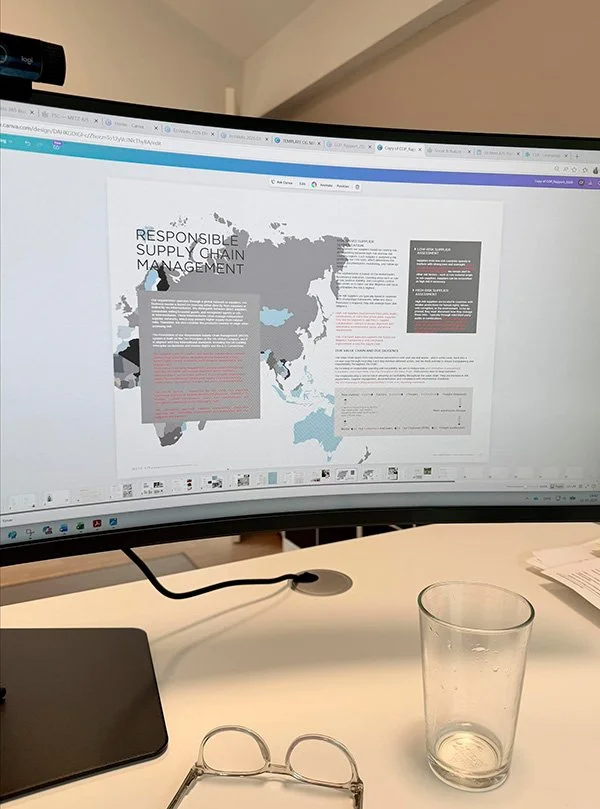
Our employees, customers, and stakeholders already know the layout. The report works both as an internal working document and as an external communication tool. Keeping the format familiar helps ensure the information stays accessible and easy to use.
So instead of using VSME as a strict reporting template, we use it as a structured data framework.
In practice, that means we:
✔️ Incorporate relevant VSME datapoints where they naturally fit
✔️ Keep the reporting structure our stakeholders already know
✔️ Strengthen data consistency and transparency behind the scenes
✔️ Improve alignment with evolving expectations and customer requirements
For us, VSME helps professionalise the data behind the report — without compromising usability or readability.
What we've done in practice
Our ESG reporting approach now includes:
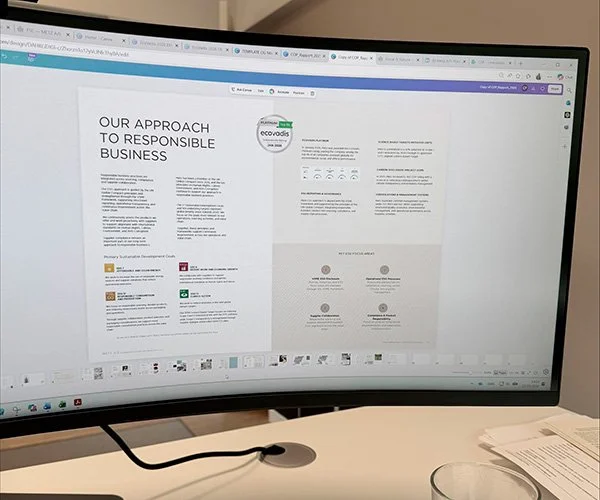
✔️ Maintaining our established report structure and communication style
✔️ Integrating relevant VSME datapoints into existing content sections
✔️ Expanding reporting on energy use, waste fractions, and employee metrics
✔️ Strengthening documentation and methodology descriptions
✔️ Using VSME as a benchmark for ESG goals, policies, and KPIs
✔️ Improving consistency across climate, supplier, and governance reporting
The result is a reporting model that balances structure, flexibility, and usability.
How SMEs can get started with VSME
For companies considering ESG reporting, VSME offers a practical place to start.
You don't need to build an ESG reporting system from scratch. Many businesses already collect relevant data through existing processes — even if they don't formally call it ESG reporting.
That can include areas like:
✔️ Electricity and energy consumption
✔️ Employee and workplace data
✔️ Supplier assessments and compliance information
✔️ Waste and recycling data
✔️ Policies and certifications
For some companies, VSME may work as a full reporting structure. Others — like Metz — may choose to use it more flexibly as a data framework while keeping their existing reporting format.
To support companies getting started, both EFRAG and Erhvervsstyrelsen have developed practical VSME-based reporting templates and guidance materials. That includes PowerPoint and Excel reporting tools designed specifically for SMEs.
A good starting point is often to focus on a small number of key datapoints — such as emissions, energy use, employee metrics, or waste reporting — and then expand gradually over time.
The advantage of VSME is that it provides a recognised, practical structure that can evolve alongside your company's own ESG maturity and customer requirements.
Conclusion
For many SMEs, ESG reporting is no longer only about compliance.
It's increasingly part of customer expectations, supply chain collaboration, risk management, and long-term business development.
At Metz, our decision to work with VSME is rooted in a desire to strengthen ESG transparency and data quality — while still maintaining a reporting approach that works in practice.
We believe ESG reporting only creates real value when the information is understandable, useful, and actually used throughout the organisation.
That's why we continue focusing on a reporting approach that is professionally structured, practically relevant, and adapted to the reality of a mid-sized business.
Further reading