Greenwashing… Are we really still talking about that?

From regulatory change to communication responsibility
As we move through the beginning of 2026, the ESG and CSR landscape remains complex and evolving. The end of 2025 brought omnibus adjustments, simplified reporting requirements, and a further postponement of the EU Deforestation Regulation (EUDR). While some elements of the regulatory framework have become clearer, others are still being refined.
What has not been relaxed, however, are expectations around how companies communicate environmental and responsibility-related claims. Across Europe, authorities are sharpening their focus on misleading statements, vague wording, and undocumented claims.
In Denmark, this is reflected in stricter enforcement of rules on environmental and responsibility-related marketing, which will apply from September 2026. These developments make greenwashing a highly relevant issue — not as a future concern, but as a practical challenge, companies must address today.
In this context, understanding what greenwashing is, why it is problematic, and how it can be avoided in practice is more important than ever.
What is greenwashing?
Greenwashing occurs when a company creates the impression that its products, services, or activities are more environmentally or socially responsible than can be documented.
This does not always happen intentionally. In many cases, greenwashing results from:

Broad or undefined terms such as “green,” “eco-friendly,” or “sustainable”
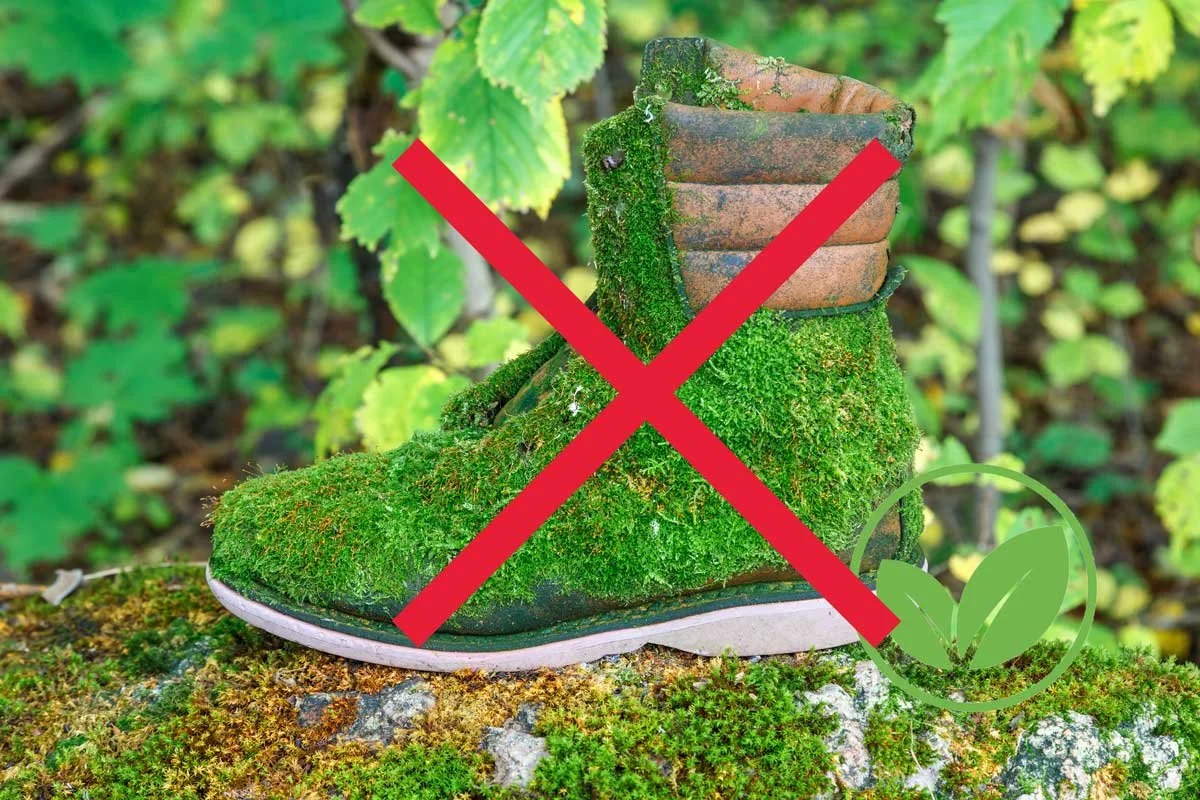
Visual elements (nature imagery, green colours, icons) that imply environmental benefits
Claims based on isolated improvements, presented as if they apply to an entire product or organisation
The underlying issue is rarely ambition. It is a lack of precision and documentation.
Why Greenwashing is a problem
Greenwashing has consequences beyond individual marketing messages.
When claims cannot be substantiated:
Customers and business partners lose trust
Companies face regulatory and reputational risk
Genuine sustainability efforts become harder to distinguish from marketing
Over time, this undermines confidence in ESG communication across entire industries.
Regulatory expectations are getting clearer
Authorities are becoming increasingly explicit about what is required when making environmental, climate, or responsibility-related claims in marketing.
In Denmark, guidance from the Danish Consumer Ombudsman already sets a high bar and from 27 September 2026, enforcement will tighten further as new provisions under the ‘Marketing practices act’ come into effect.
What is already required
Today, the key expectations are clear:
Environmental and climate-related claims must be accurate, specific, and supported by verifiable documentation
General or vague claims (e.g. “green”, “sustainable”, “environmentally friendly”) are considered misleading unless they can be substantiated across the product’s full life cycle
Claims such as “CO₂ neutral” or “climate neutral” require robust, independent third-party verification
Claims about recycled, organic, or similar content must either:
o exceed 95%, or
o clearly and prominently state the exact percentage

What are the new changes
From September 27th, 2026, Danish enforcement will become more explicit and restrictive, particularly regarding how environmental messages are framed and presented. This includes:
A ban on self-created environmental labels, symbols, or badges that are not based on recognised certification schemes or established public standards
Restrictions on offsetting-based climate claims, meaning a product cannot be marketed as “CO₂ neutral” or similar solely because emissions have been offset (e.g. via tree planting or carbon credits)
Stricter assessment of overall impression, including:
o highlighted text, typography, or visual emphasis that may exaggerate the importance of a single environmental attribute
o the use of colours, icons, imagery, or design elements that create a misleading “green” impression of the product or company as a whole
Claims about regulatory compliance or legal requirements (e.g. “meets EU standards”) may not be presented as a special environmental or competitive advantage
The direction is clear
The regulatory direction is unmistakable:
Claims must be specific, factual, and proportionate
Documentation must be relevant, up-to-date, and verifiable
Marketing will be assessed not only on individual statements, but on the overall impression created
In short, environmental and responsibility claims must reflect reality, not aspiration.
Why products cannot be marketed as “sustainable”

One of the most common, and most problematic, product-related claims is the use of the word “sustainable” (“bæredygtig”)
In widely used definitions of sustainability and sustainable development, the core principle is meeting the needs of the present generations without compromising the ability of future generations to meet their own needs.
Danish guidance treats “sustainable” (“bæredygtig”) as a broad, general claim that risks being misleading unless it is clearly specified and supported by robust documentation, a level of documentation that is, in practice, extremely difficult to establish for individual products.
To credibly market a product as “sustainable” (“bæredygtig”) a company would therefore need to demonstrate, with robust evidence, that the product, across its entire life cycle:
Stays within environmental limits, meaning it does not contribute to pushing natural systems beyond safe operating thresholds
Meets high social standards throughout the entire value chain, including respect for human rights and labour conditions
Does not undermine the ability of current or future generations to meet their needs, meaning that benefits today are not achieved by shifting environmental or social burdens elsewhere or into the future
With six out of nine planetary boundaries already exceeded, and with highly complex global value chains, no company can comprehensively document that a product fulfils all these conditions.
For this reason, products cannot be marketed as “sustainable/bæredygtigt”.
How Metz works to avoid greenwashing
At Metz, we approach greenwashing as a matter of compliance, credibility, and responsibility. Not branding.
Our approach includes:
Clear internal guidelines for environmental and responsibility-related claims
Defined approval processes, ensuring consistent use of claims across departments
Restricted use of broad or undefined terminology
Strict documentation requirements, including third-party data and recognised certifications
Environmental claims are only used when they can be verified, explained, and substantiated.
From broad claims to verifiable facts
Rather than using general statements, responsible communication focuses on specific, measurable attributes, such as:
“Contains xx% recycled plastic”
“Produced using xx% renewable electricity”
“Certified according to xxx”
These examples illustrate how claims should be formulated to ensure that customers and partners can understand exactly what is meant and how the claim can be verified.
Practical steps to reduce greenwashing risk
Companies reviewing their ESG communication in 2026 may benefit from:
Mapping existing claims and identifying vague or undocumented wording
Establishing internal rules for how claims may be used
Training marketing, product teams and sales teams on claim requirements
Replacing broad statements with precise, factual information
Conclusion
While ESG regulation continues to evolve, one principle remains stable: trust is built on accuracy and documentation.
At Metz, avoiding greenwashing is not about avoiding ambition. It is about communicating responsibly, in line with both regulatory expectations and reality.
Responsibility is not a slogan. It is a process that must be documented, communicated precisely, and continuously improved.
Want to learn more about how we work with ESG, CSR, and compliant communication? You can find further details in our ESG & COP Report or contact us directly.
Knowledge resources (further reading)
Do you want to explore official guidance, regulatory context, and practical perspectives on environmental claims and greenwashing, the following resources provide valuable background and further reading:
Danish Consumer Ombudsman – Guidelines for environmental marketing
Practical recommendations for companies on how to formulate and substantiate environmental claims (in Danish):
https://forbrugerombudsmanden.dk/media/e4bdf1uo/virksomheders-miljoemarkedsfoering-forbrugerombudsmandens-anbefalinger.pdf
European commission – Green claims initiative
Overview of the EU’s approach to green claims and sustainable product communication, including guidance on substantiation and consumer protection:
https://environment.ec.europa.eu/topics/circular-economy-topics/green-claims_en
METZ A/S – New rules for environmental marketing in Denmark: What you need to know
A practical overview of the Danish regulatory framework and key implications for companies (published August 2025):
New rules for environmental marketing in Denmark: What you need to know — METZ A/S — METZ A/S