
Ai generated image
A wooden gift from China. A notebook from a European supplier. A chocolate gift made with cocoa from another part of the world.
Different products. Different supply chains. And different responsibilities under the EU Deforestation Regulation (EUDR).
The regulation aims to ensure that products covered by EUDR do not contribute to deforestation or forest degradation.
But what does it mean when purchasing products?
And who is responsible for ensuring that the requirements are met?
1. Not every product is covered by EUDR
EUDR covers certain products made from wood, cocoa, coffee, natural rubber and other specified commodities.
But not every product containing these materials is covered.
Following the EU's latest amendments, printed products classified under customs Chapter 49, such as books and certain calendars, have been removed from the regulation. Products made entirely from bamboo, synthetic rubber or qualifying recycled materials may also fall outside its scope.
The material matters. But so does the product classification.
And for products that are covered, another question becomes important:
Who first placed the product on the EU market?
When Metz imports a covered product directly from outside the EU, we act as the Operator, responsible for carrying out due diligence before import.
When purchasing products already placed on the EU market by another company, we generally act as a Trader, with different documentation and traceability requirements.
Same product. Different responsibilities.
2. What happens behind the scenes?
At Metz, we have developed procedures that integrate EUDR into our everyday purchasing and compliance processes.
When we act as the Operator, we collect information about raw material origins, verify geographical locations using satellite data, assess deforestation risks and create the DDS in the EU Traces system.
Certifications such as FSC® and PEFC may support our assessment, but they do not replace the required due diligence.
If the risk cannot be reduced to a negligible level, we do not import the product.
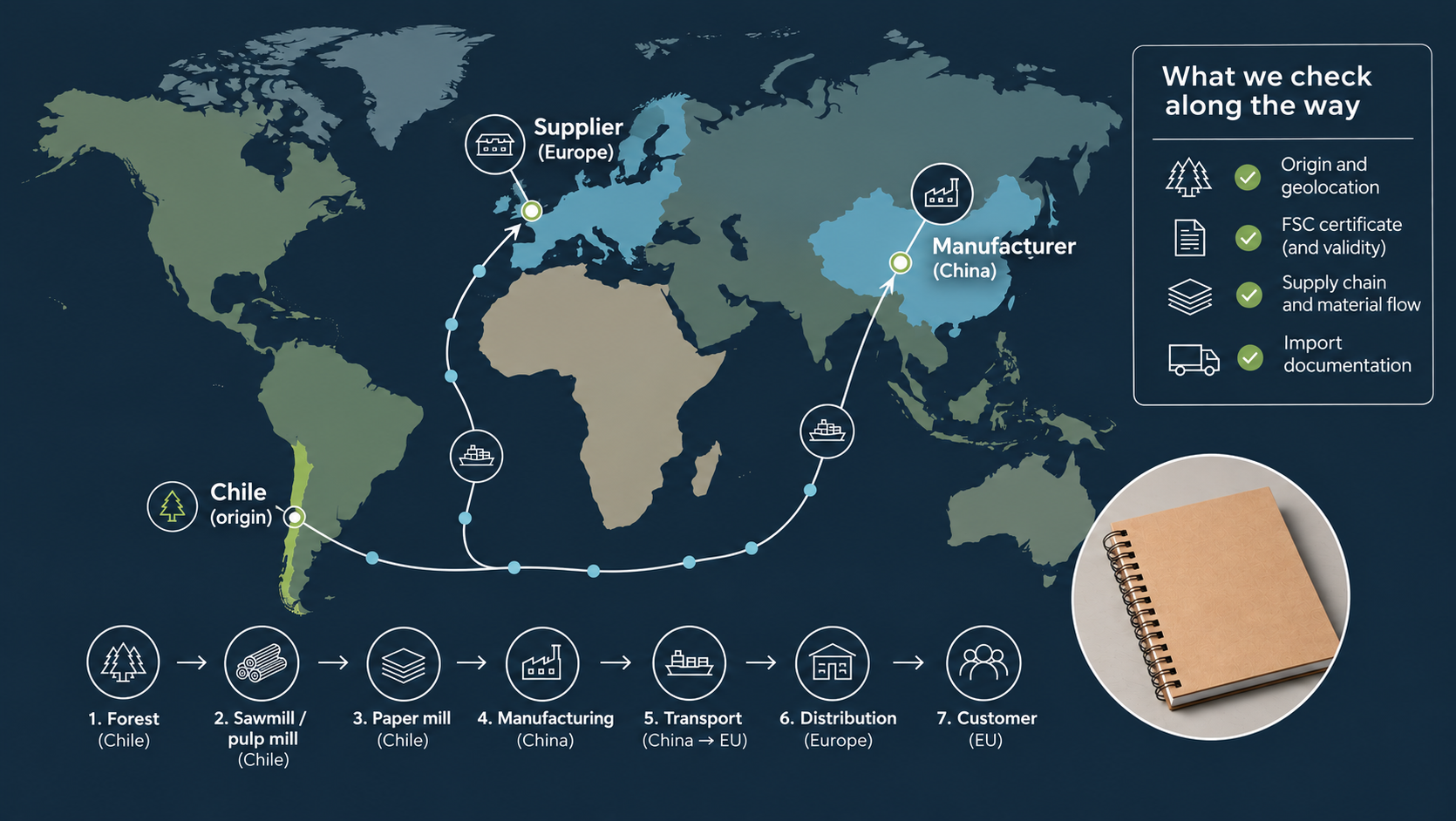
Illustration made with AI
When purchasing from EU suppliers, we identify who first placed the product on the market. If we buy directly from the Operator, we collect the required Due Diligence Statement (DDS) reference. Further down the supply chain, different traceability requirements apply.
And when products are exported outside the EU, we ensure that the relevant DDS reference or customs declaration code is used, depending on our role and the product's history.
Different suppliers. Different requirements. One structured process.
3. What does this mean to you?
Our supply chain is complex. Your purchasing process shouldn't have to be.
By integrating EUDR into our sourcing procedures, we:
✔️ Identify which products are covered, and which are exempt
✔️ Determine responsibilities within the supply chain
✔️ Manage supplier documentation and traceability
✔️ Assess deforestation risks where required
✔️ Handle the relevant import and export documentation
This means the necessary checks and documentation are part of our sourcing process rather than something customers have to investigate from the beginning.
Customers may still have their own obligations depending on how products are used, resold or exported, but our procedures help make the requirements easier to navigate.
From complex supply chains to practical compliance
EUDR adds another layer of responsibility to international sourcing.
For Metz, the challenge has been to turn complex requirements into clear procedures that work across different products, suppliers and markets.
And for our customers, that is where the value lies.
Not in understanding every detail of EUDR, but in knowing that the necessary checks, documentation and traceability are part of the sourcing process.
Because responsible sourcing is not only about knowing where a product comes from.
It is also about knowing what happens before it reaches you.
Want to know more?
Commission Delegated Regulation (EU) 2026/2102